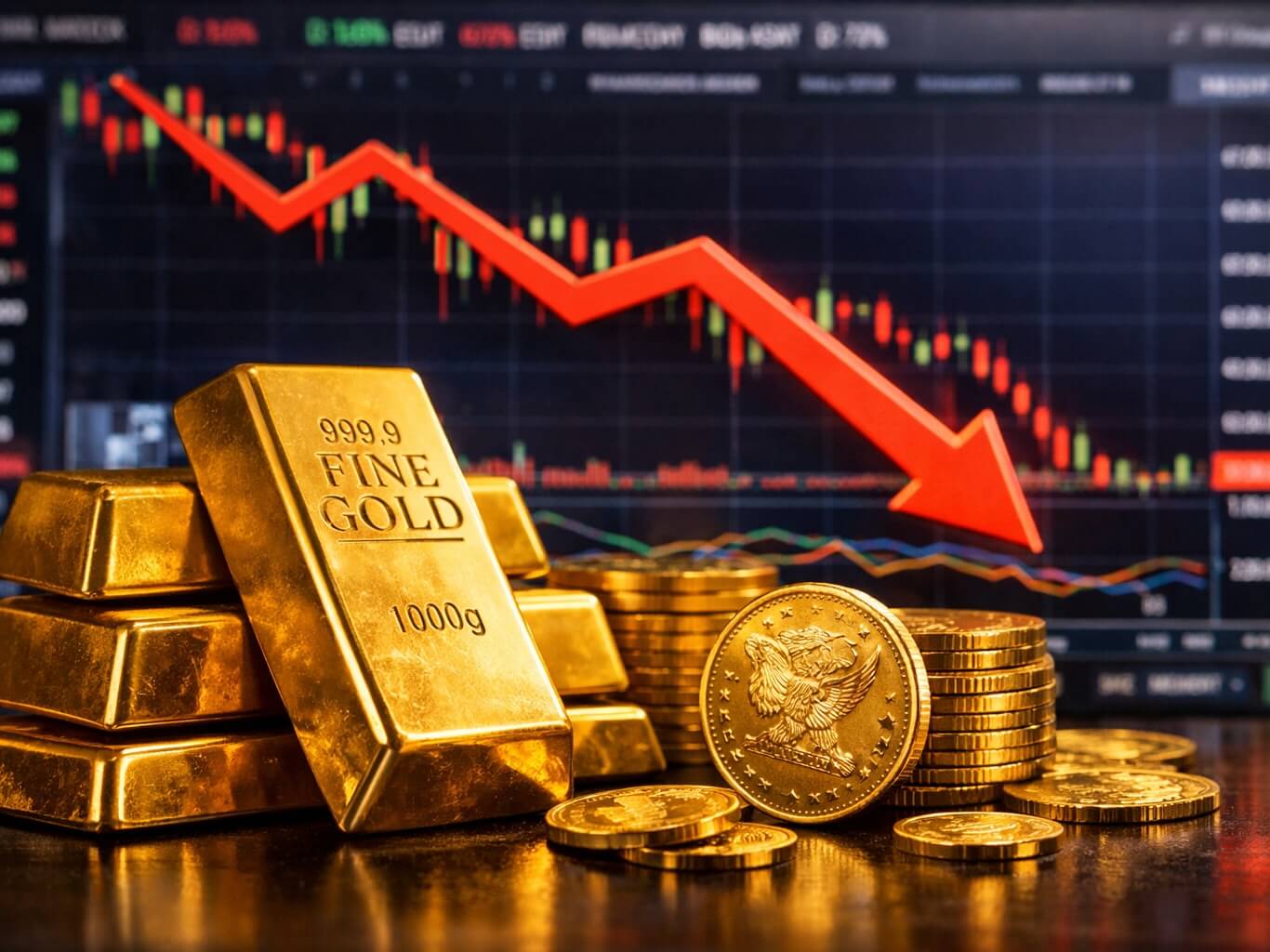
Gold’s sharp reversal is getting harder to ignore. After reaching a record high of $5,589.38 an ounce in January, the precious metal has fallen by roughly one-third, dropping below $3,700 on Thursday for the first time since September 2025.
A stronger U.S. dollar and rising Treasury yields are putting pressure on prices. With interest rates moving higher, investors have more attractive alternatives to gold, which does not generate income. Holding cash and bonds has become increasingly appealing as money market funds offer yields of around 4% to 5%.

The sell-off has also changed how investors view gold. What once served as a safe haven has increasingly become a source of liquidity, with some market participants selling their holdings to raise cash. Meanwhile, analysts remain divided on what comes next, with some warning that prices could fall toward 3,500–3,600.
Despite the downturn, the long-term case for gold has not disappeared. Central banks continue to accumulate the metal, and some experts still see it as a useful hedge against uncertainty and a way to diversify portfolios. However, they caution against treating gold as a short-term growth investment, particularly after its extraordinary rally.