Crypto markets never sleep, and for active traders, that means opportunities can show up at almost any hour. Short-term trading on a 1-minute chart can be exciting, especially when Bitcoin or Ethereum starts making sharp moves. But there is a catch: the faster the market moves, the easier it is to make emotional decisions and give back your profits.
The goal isn’t to catch every price swing. It’s to find a repeatable setup, keep losses small, and take trades only when the odds are in your favor. With the right approach, even a very short trading window can become more structured and disciplined.
Here’s a practical framework for navigating fast-moving crypto markets without taking unnecessary risks.

1. Start With the Bigger Picture
One of the most common mistakes beginners make is trying to read the entire market from a 1-minute chart. That’s a problem because short-term price movements are often just random noise.
A better approach is to use two timeframes:
- 5-minute chart. Identify the overall direction and key support and resistance levels.
- 1-minute chart. Look for precise entry points once the broader trend is clear.
For example, if Bitcoin is consistently making higher highs and higher lows on the 5-minute chart, focus primarily on buying opportunities. If the market is trending lower, look for short setups instead.
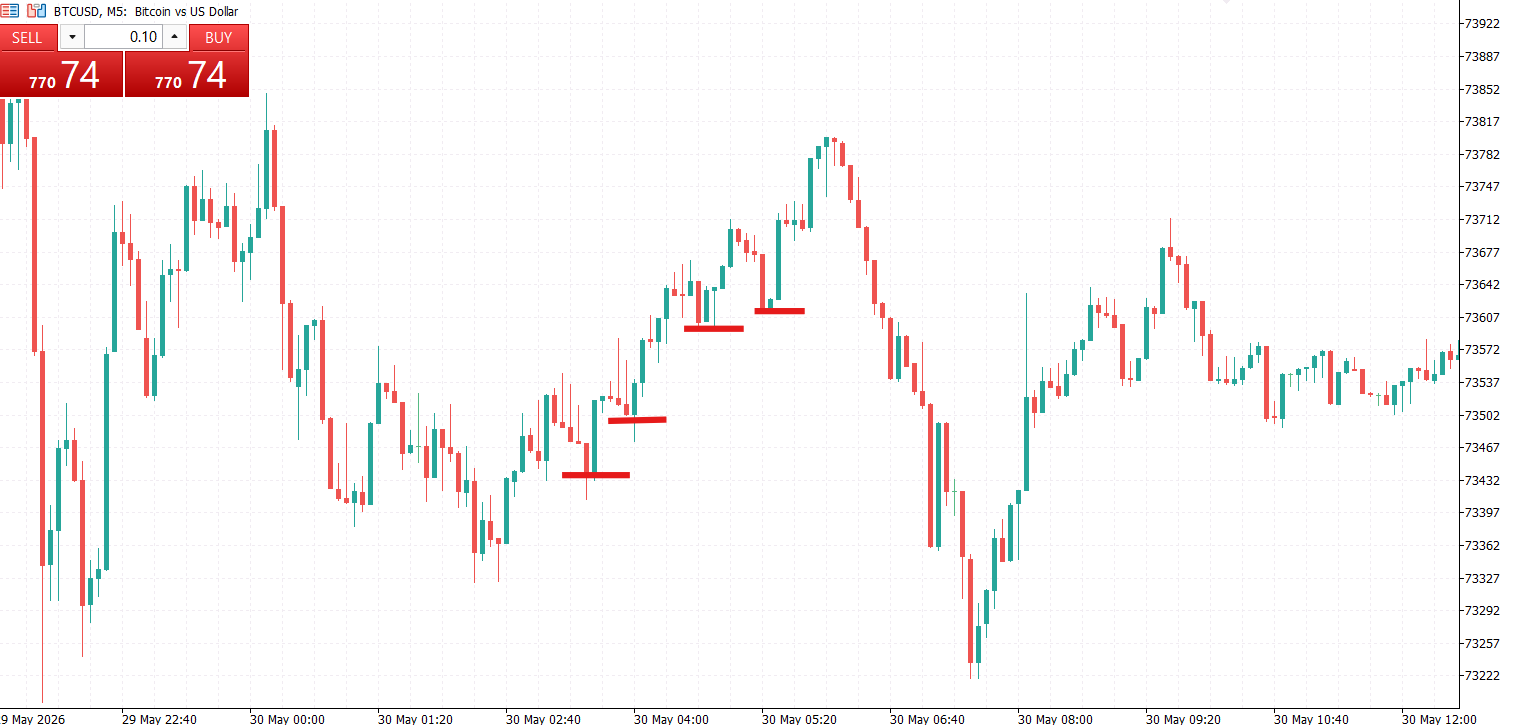
This simple filter helps avoid fighting the broader market and reduces the temptation to trade every small price movement.
2. Keep Your Indicators Simple
You don’t need a screen full of indicators to make better trading decisions. In fact, too many signals can create confusion.
A useful starting setup includes:
- 20 EMA. Helps identify short-term momentum and dynamic support or resistance.
- 50 EMA. Provides a broader view of the intraday trend.
- VWAP. Shows the average traded price weighted by volume and helps identify whether buyers or sellers have the upper hand.
- Volume. Confirms whether a price move has meaningful participation behind it.
The idea is simple: look for several signals pointing in the same direction rather than relying on a single indicator.
When price is above VWAP and both moving averages are rising, buyers generally have the advantage. When price is below VWAP and the averages are falling, sellers are more likely to control the market.

3. The Pullback-and-Reclaim Setup
One of the more straightforward approaches for short-term crypto trading is to wait for a pullback before entering in the direction of the trend.
Here’s how it works:
Step 1: Identify the trend.
Check the 5-minute chart. Look for a clear upward or downward structure rather than a sideways market.
Step 2: Wait for a pullback.
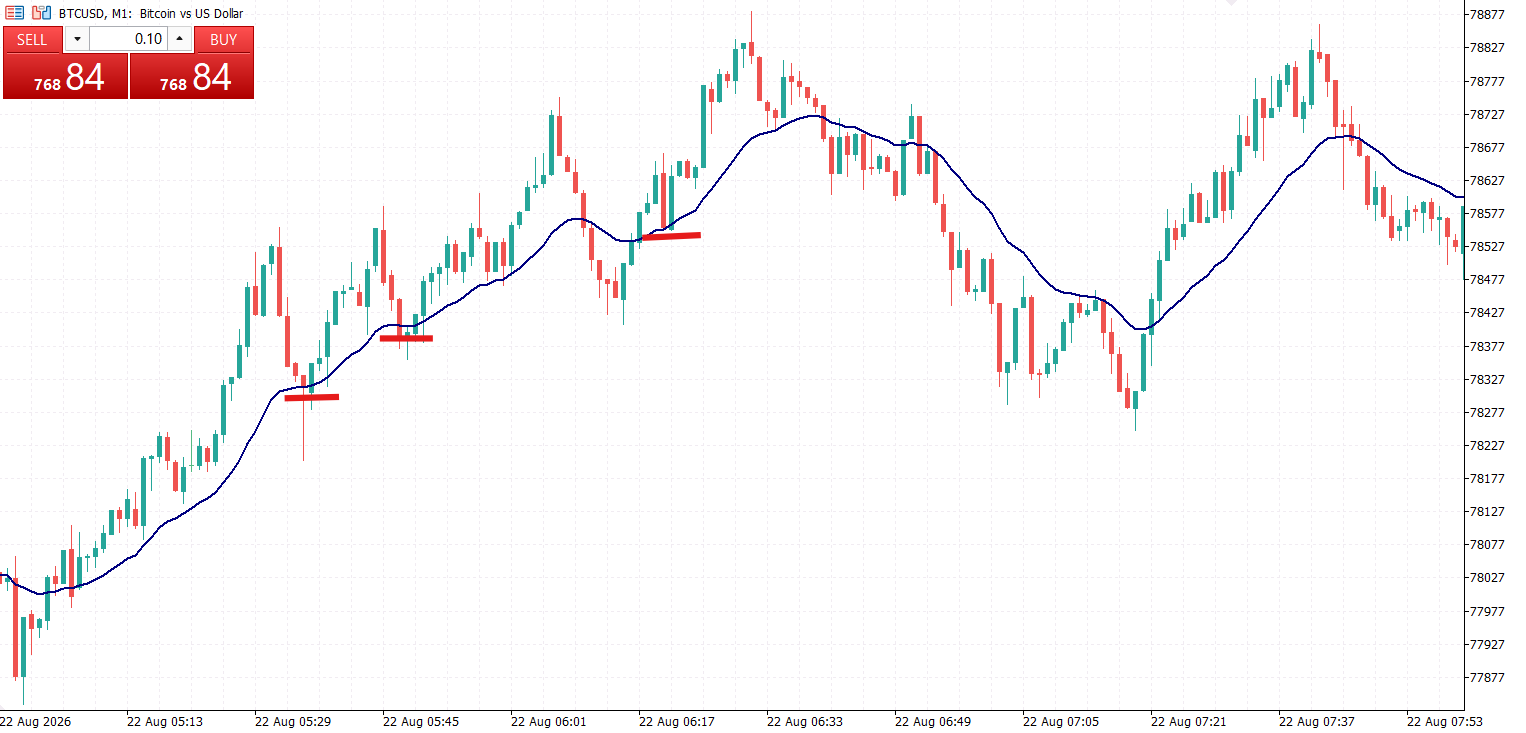
On the 1-minute chart, let price move back toward the 20 EMA or VWAP. Avoid chasing a candle that has already made a large move.
Step 3: Look for confirmation.
For a long trade, wait for buyers to step in and push price back above the relevant level. A bullish candle accompanied by increasing volume can provide additional confirmation.
For a short trade, look for the opposite: a failed attempt to reclaim the level, followed by renewed selling pressure.
Step 4: Define your stop before entering.
Place the stop beyond the recent swing low for a long position or the recent swing high for a short position. The level should invalidate the trade idea, not simply represent an arbitrary dollar amount.
Step 5: Set a realistic target.
A potential reward-to-risk ratio of 1.5:1 or 2:1 is a reasonable starting point for testing this setup. However, the target should also account for nearby support and resistance.
The biggest advantage of this approach is patience. Instead of jumping into every breakout, you wait for price to pull back and show that the original trend may still be intact.

4. Know When NOT to Trade
Sometimes the best trade is the one you skip. The 1-minute chart can become especially unpredictable during major economic announcements, sudden Bitcoin moves, and periods of unusually low liquidity.
Be cautious when:
- Price is moving sideways with no clear direction.
- Volume is unusually low.
- Spreads widen significantly.
- Major economic data or central bank announcements are approaching.
- Price is making sharp moves without meaningful confirmation.
It’s also worth sticking to highly liquid markets, such as BTC/USDT and ETH/USDT. Smaller altcoins may offer bigger price swings, but they often come with wider spreads, thinner order books, and more unpredictable execution.

5. Build Consistency Before Increasing Size
Before putting meaningful capital at risk, test the setup on historical data and in a demo environment. Pay particular attention to fees, slippage, execution quality, and how the strategy performs in both trending and sideways markets.
Keep a trading journal and record:
- Entry and exit prices.
- The reason for entering.
- Stop-loss and take-profit levels.
- Whether the trade followed the broader trend.
- The final result after trading costs.
After collecting at least 50–100 trades, review the results. Look beyond the win rate. Average profit, average loss, maximum drawdown, and overall expectancy will tell you much more about whether the approach is actually working.

Final Thoughts
Fast crypto trading doesn’t have to mean reckless trading. The key is to simplify your setup, follow the broader market direction, wait for confirmation, and know exactly how much you’re willing to lose before opening a position.
A 1-minute chart offers plenty of opportunities, but not every movement deserves your attention. Focus on quality over quantity, protect your capital, and let consistency take priority over chasing quick wins.
In the long run, surviving the market’s volatility is far more important than catching every move.