
Cryptocurrency markets are known for sharp price swings, rapid rallies, and equally fast corrections. While some traders focus on short-term moves, another approach is built around a much longer time horizon. Instead of reacting to every change in price, traders following this method try to identify major market trends and hold positions for weeks, months, or even longer.
This approach can be particularly relevant in crypto because major market cycles often develop over extended periods. Bitcoin and other large cryptocurrencies can spend months moving within a broad trend before a major breakout or reversal occurs. The goal is not to capture every short-term fluctuation but to participate in a larger move while giving the trade enough room to develop.
Understanding the Long-Term Approach
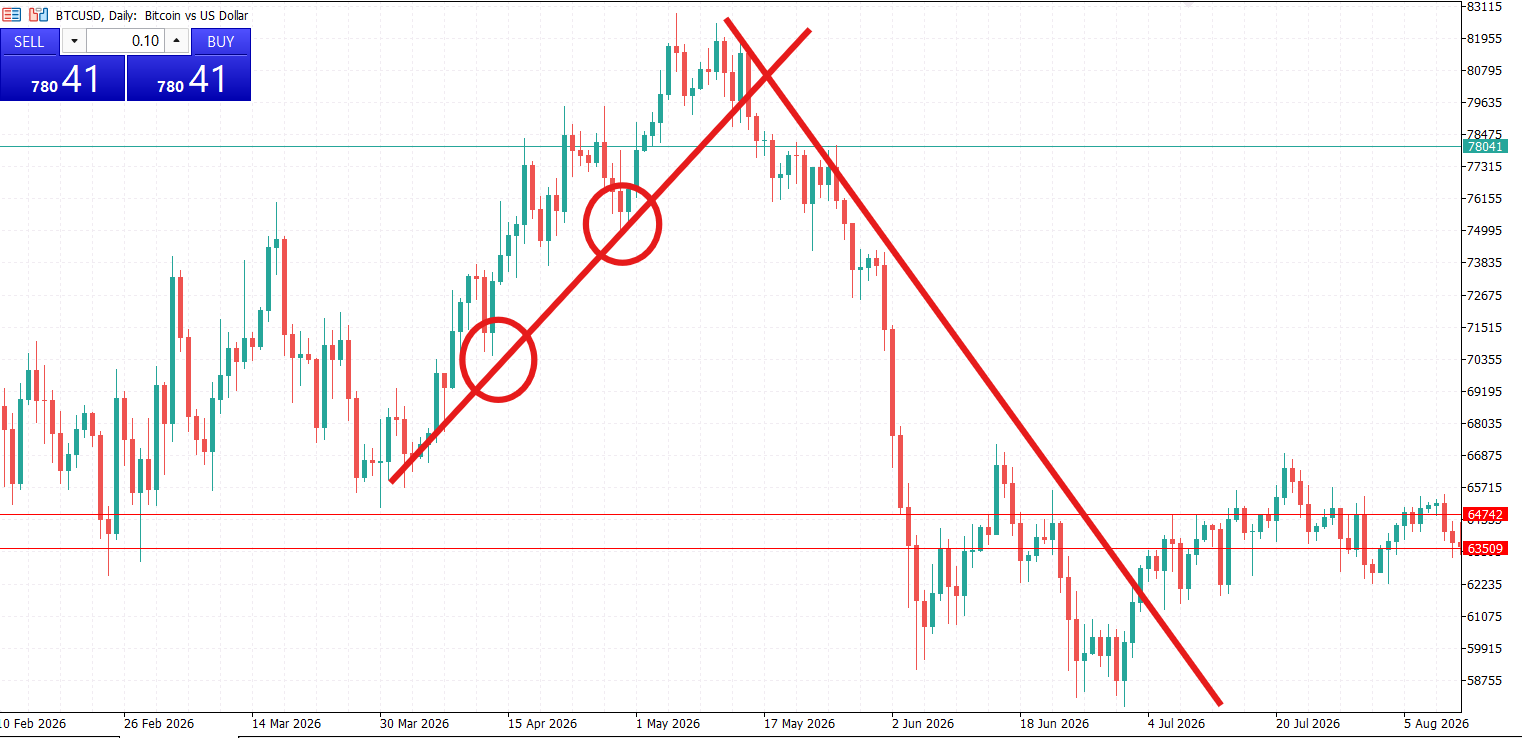
The basic idea is relatively simple: identify a broader market direction, find a suitable entry point, and remain in the position while the underlying trend stays intact. This requires a different mindset from short-term trading. Daily price movements may be significant, but they do not necessarily change the broader market structure.
For example, a trader may identify a long-term bullish trend after Bitcoin moves above a major resistance level and begins forming higher highs and higher lows. Rather than closing the position after a small pullback, the trader may continue holding as long as the broader structure remains bullish.
The same principle applies in a declining market. If a cryptocurrency remains below major resistance and continues to form lower highs and lower lows, traders may view rallies as part of the broader downtrend rather than immediately treating them as a reversal.

Choosing the Right Time Frame
Time-frame selection is one of the most important parts of this approach. Short-term charts can contain a lot of noise, particularly in cryptocurrency markets, where price can move several percentage points within hours.
Daily and weekly charts are often more useful for identifying major trends. A weekly chart can help reveal the broader market cycle, while a daily chart can provide more detail when looking for an entry or managing an existing position.
Using multiple time frames can also help. A trader might first examine the weekly chart to determine the overall direction and then move to the daily chart to identify important support, resistance, and potential entry areas.

Technical Analysis and Market Structure
Technical analysis can help traders determine whether a long-term trend is developing or losing momentum. Moving averages, trend lines, support and resistance levels, and momentum indicators can all provide useful information.
Major moving averages are particularly useful when analyzing longer-term trends. When price remains above a rising moving average, the broader structure may support a bullish outlook. Conversely, sustained trading below a declining average can indicate that sellers remain in control.
Support and resistance are equally important. Previous cycle highs, major lows, and areas where price has repeatedly reversed can become important reference points. A breakout above a major resistance level may strengthen a bullish setup, while a breakdown below long-term support can suggest that the trend is changing.
However, no indicator should be treated as a guarantee. Crypto markets can move sharply in response to unexpected news, liquidity changes, regulatory developments, or shifts in investor sentiment.

Managing Risk Over Longer Holding Periods
Holding a position for weeks or months does not remove the need for risk management. In fact, it can make risk control even more important because a large market move can develop while the position remains open.
One common approach is to define the maximum acceptable loss before entering the trade. A stop-loss can be placed at a level that would invalidate the original market thesis, rather than simply choosing an arbitrary percentage.
Position size also matters. A wider stop generally means the position should be smaller if the trader wants to maintain the same level of risk. This allows the trade more room to fluctuate without exposing the entire account to excessive losses.
Traders should also avoid concentrating too much capital in a single cryptocurrency. Diversification can reduce the impact of an unexpected move in one asset, although it cannot eliminate market-wide risk.

Patience Is Part of the Strategy
One of the biggest challenges is psychological rather than technical. Crypto markets operate around the clock, making it easy to check prices constantly and react to every short-term movement.
Longer-term traders need to distinguish between normal market noise and a genuine change in trend. A temporary decline does not necessarily invalidate a bullish setup, just as a short rally does not automatically end a bearish trend.
Having a clear trading plan can help reduce emotional decisions. Before entering a position, it is useful to define the reason for the trade, the conditions that would invalidate the idea, the expected time horizon, and the level of risk.

When This Approach Makes Sense
A longer-term approach can be useful when a cryptocurrency is showing a clear trend and the trader has a strong conviction in the broader market structure. It may also suit people who cannot monitor charts throughout the day.
It is less suitable for markets with no clear direction or for traders who frequently change their views based on short-term price movements. During highly volatile periods, even a strong long-term trend can experience deep corrections, so traders need to be prepared for significant fluctuations.
Ultimately, successful long-term crypto trading is less about predicting every move and more about identifying favorable market conditions, controlling risk, and allowing well-planned positions enough time to develop. The strongest setups are not necessarily the ones that generate the fastest returns. Often, consistency comes from waiting for a clear opportunity and staying disciplined after entering the market.