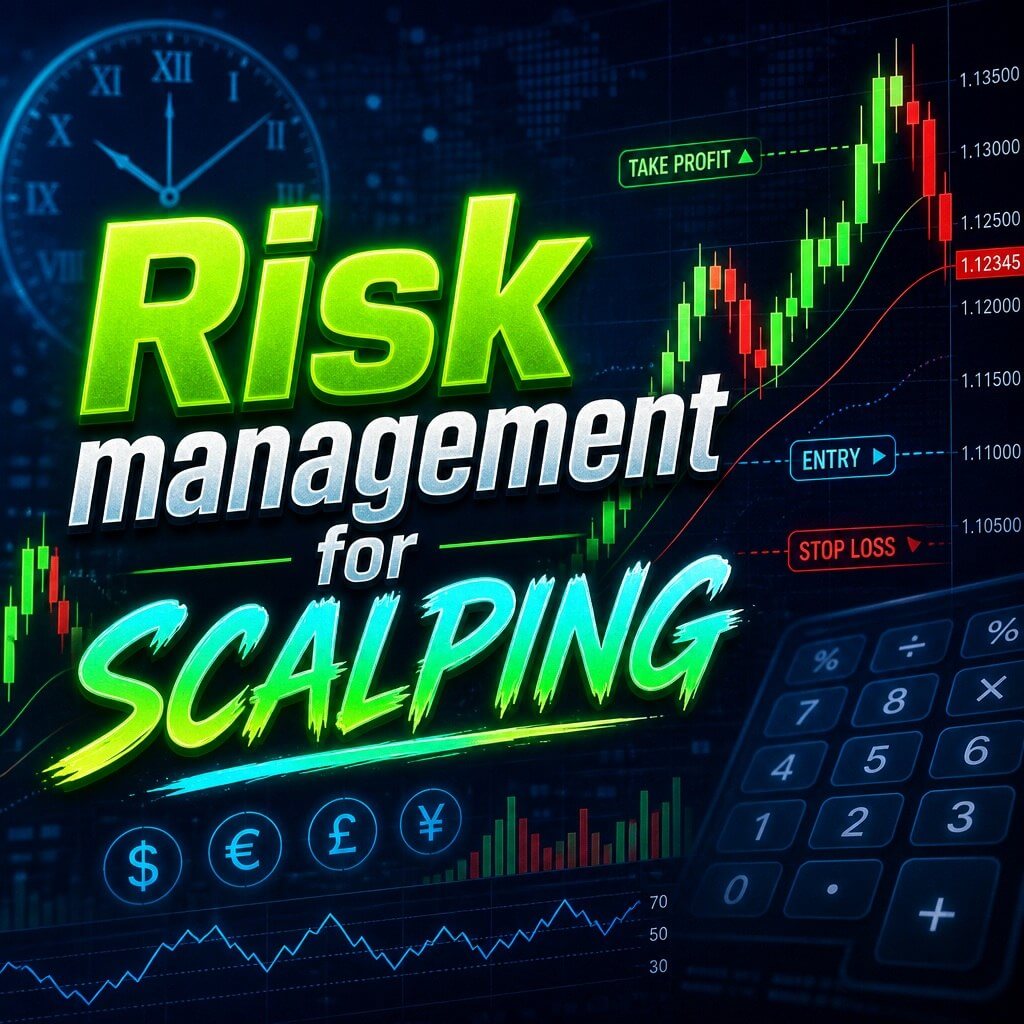
Scalping is built around speed. Traders open and close positions within minutes, sometimes seconds, aiming to capture small price moves. That makes risk management especially important. A single large loss can wipe out the gains from many successful trades.
A good scalping risk management strategy is not about avoiding losses altogether. It is about keeping every individual loss small enough that a series of losing trades does not seriously damage your account.
Set a Fixed Risk Per Trade
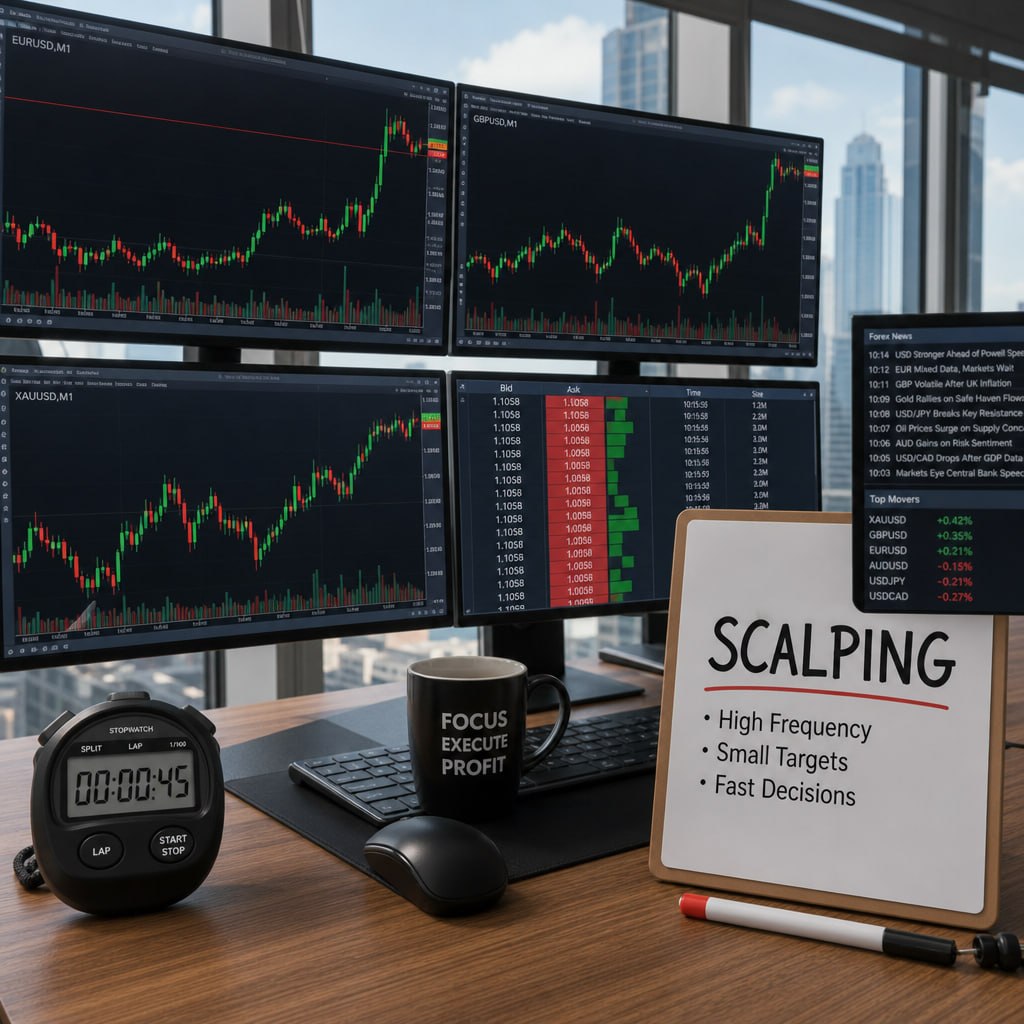
The first rule is simple: decide how much you are willing to lose before entering a trade. Many traders use a small percentage of their account balance, such as 0.25% to 1% per trade. The exact number depends on your strategy, experience and risk tolerance.
For example, with a $10,000 account and a 0.5% risk limit, the maximum planned loss on one trade would be $50.
This creates a clear boundary. You do not increase the position simply because a setup looks particularly attractive.

Use a Stop-Loss on Every Trade
A stop-loss is one of the most important tools for scalpers. Because positions are held for short periods, there is little room to recover from a sudden move against you. Place the stop based on the market structure and the setup, not on an arbitrary number of points. The distance to the stop should then determine your position size.
A wider stop with a smaller position can carry the same dollar risk as a tighter stop with a larger position. Avoid moving a stop farther away simply to prevent a trade from closing at a loss. That changes the original risk calculation and can turn a small losing trade into a much larger one.

Control Your Leverage
Leverage can make scalping capital-efficient, but it also magnifies losses. A small price movement can have a significant impact when the position is highly leveraged. Do not choose position size based on the maximum leverage your broker allows. Choose it based on the amount you are willing to lose if the trade reaches its stop.
High leverage can also encourage overtrading because small price movements appear more profitable. For a scalper, that can quickly lead to excessive exposure.

Set a Daily Loss Limit
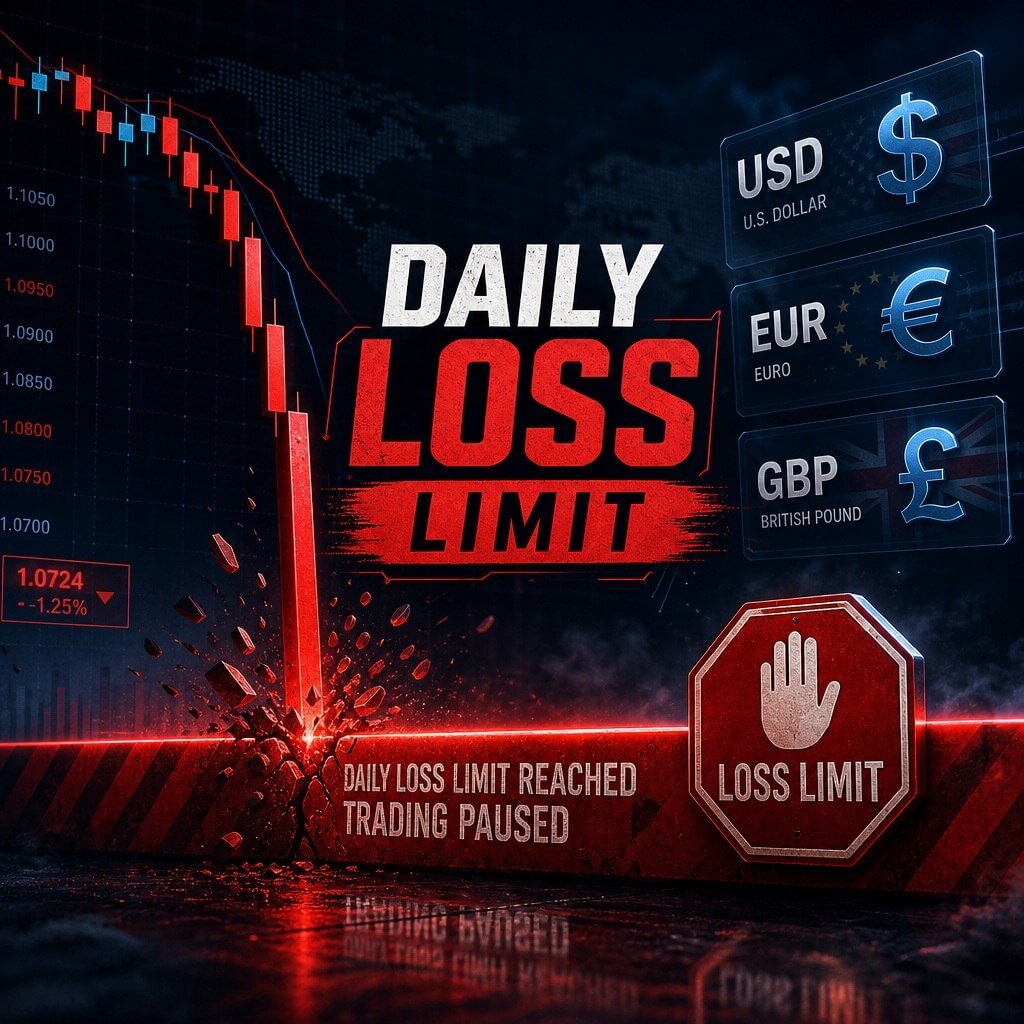
A daily loss limit protects you from the most dangerous scalping habit: trying to win back losses. For example, you might decide to stop trading after losing 2% of your account in one day. Once the limit is reached, trading ends regardless of how good the next setup looks.
This rule is particularly useful because scalping can become emotionally exhausting. After several losses, traders may increase their position size, take lower-quality setups or enter trades without waiting for confirmation. A daily loss limit removes the decision from the moment.
Limit the Number of Consecutive Losses
A fixed number of losing trades can also trigger a trading pause. For example, after three consecutive losses, you could stop and review the trades before continuing. This does not mean the strategy is necessarily failing. It simply creates a cooling-off period. The goal is to prevent frustration from turning into revenge trading.
Pay Attention to Spread and Slippage
Transaction costs matter more for scalpers than for many longer-term traders. When your target is only a small price movement, even a relatively small spread can take a meaningful portion of the potential profit.
Slippage can become another problem during fast markets. Your order may be executed at a different price than expected, particularly around major economic releases or sudden market moves.
Before trading an instrument, understand its typical spread, liquidity and execution conditions during the hours you plan to trade.

Be Careful Around Economic News
Major economic releases can create extreme short-term volatility. Employment reports, inflation data, central bank decisions and GDP releases can cause prices to move sharply within seconds.
If your strategy is not specifically designed for news trading, consider avoiding new positions immediately before major releases. Even if the direction of the initial move seems obvious, execution can be difficult. Spreads may widen, liquidity can change and stop-loss orders may be filled at less favorable prices. An economic calendar should therefore be part of your daily scalping routine.

Use a Risk-to-Reward Framework
Scalpers often target relatively small price movements, so the relationship between potential profit and potential loss matters. Suppose a trade risks $50 and targets $100. That gives a 1:2 risk-to-reward ratio. The strategy does not need to win every trade to remain profitable if the execution and win rate support the setup.
However, risk-to-reward should not be forced onto every trade. A stop should be placed where the trade idea is invalidated, and the target should be based on realistic market conditions. The key is to understand the relationship between your average win, average loss and win rate.

Avoid Overtrading
Scalping can create dozens of potential setups during a single session. That does not mean you need to trade all of them. Set clear criteria for what qualifies as a trade. If a setup does not meet those conditions, skip it. A simple trading plan might define:
- Which markets you trade
- Which sessions you trade
- Maximum risk per trade
- Maximum daily loss
- Maximum number of open positions
- Entry conditions
- Stop-loss rules
- Take-profit rules
- Conditions for stopping trading
The more decisions you make before the session begins, the fewer emotional decisions you need to make during it.

Keep a Trading Journal
A trading journal helps turn risk management into measurable data. Record the entry, exit, position size, stop-loss, target, result and reason for taking the trade. Also track spreads, slippage and whether the trade occurred around a major news release.
After enough trades, you can identify patterns. Perhaps your strategy performs well during one session but poorly during another. Maybe trades taken immediately before economic releases have much worse results. The goal is not to document every mistake. It is to discover which behaviors improve or damage your results.
Build a Scalping Risk Management Plan
The objective of scalping is not to make every trade profitable. Losses are part of the strategy. The real objective is to make sure that losses remain controlled while profitable trades have enough room to generate a positive result over a large sample of trades.
Good risk management gives a scalping strategy the chance to survive. Without it, even a strategy with a genuine statistical edge can be undermined by one oversized position, a series of emotional trades or a single volatile market event.