
The Marubozu candlestick is one of the clearest candlestick patterns in technical analysis. It signals strong buying or selling pressure and can give traders an early indication that a market is moving decisively in one direction.
The name comes from the Japanese word for “bald,” referring to the candle’s lack of, or very small, upper and lower wicks. Instead of showing significant intraday rejection, a Marubozu reflects a market where buyers or sellers largely controlled the entire trading session.
What Is a Marubozu?
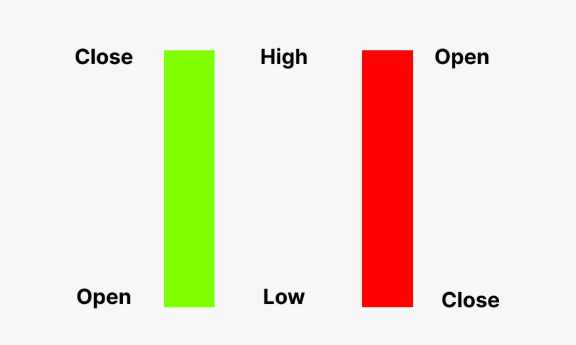
A Marubozu is a candlestick with a large real body and little or no shadow. A bullish Marubozu opens near the low of the period and closes near the high. This means buyers were in control from the opening bell to the close.
A bearish Marubozu does the opposite. It opens near the high and closes near the low, showing that sellers dominated the session.
The stronger the body and the smaller the wicks, the more decisive the price action generally appears. However, a Marubozu should not be treated as a standalone buy or sell signal. Its meaning depends heavily on where it appears on the chart and what the broader market is doing.
Bullish vs. Bearish Marubozu
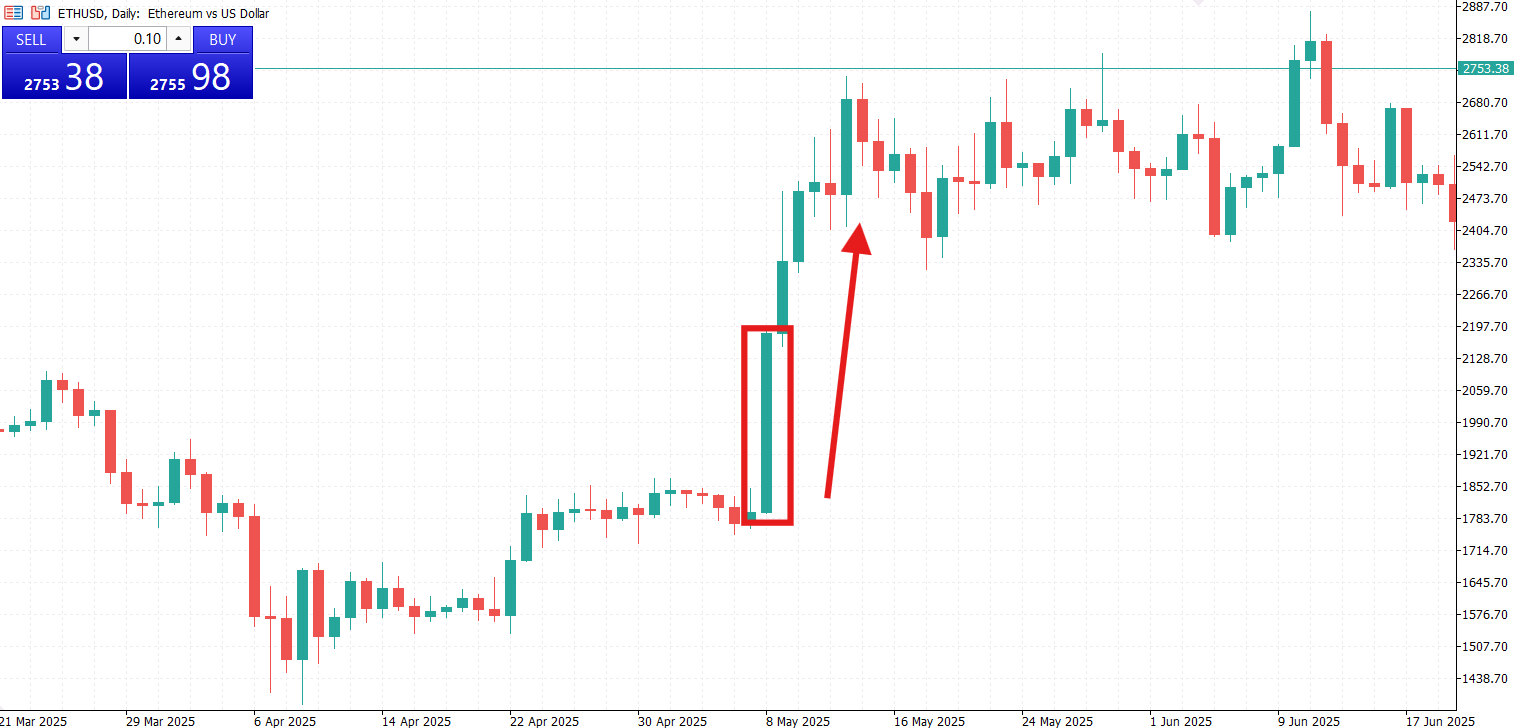
A bullish Marubozu can signal strong demand. When it appears after a decline or near a major support level, it may indicate that buyers are stepping in and that the market could be preparing for a reversal or continuation higher.
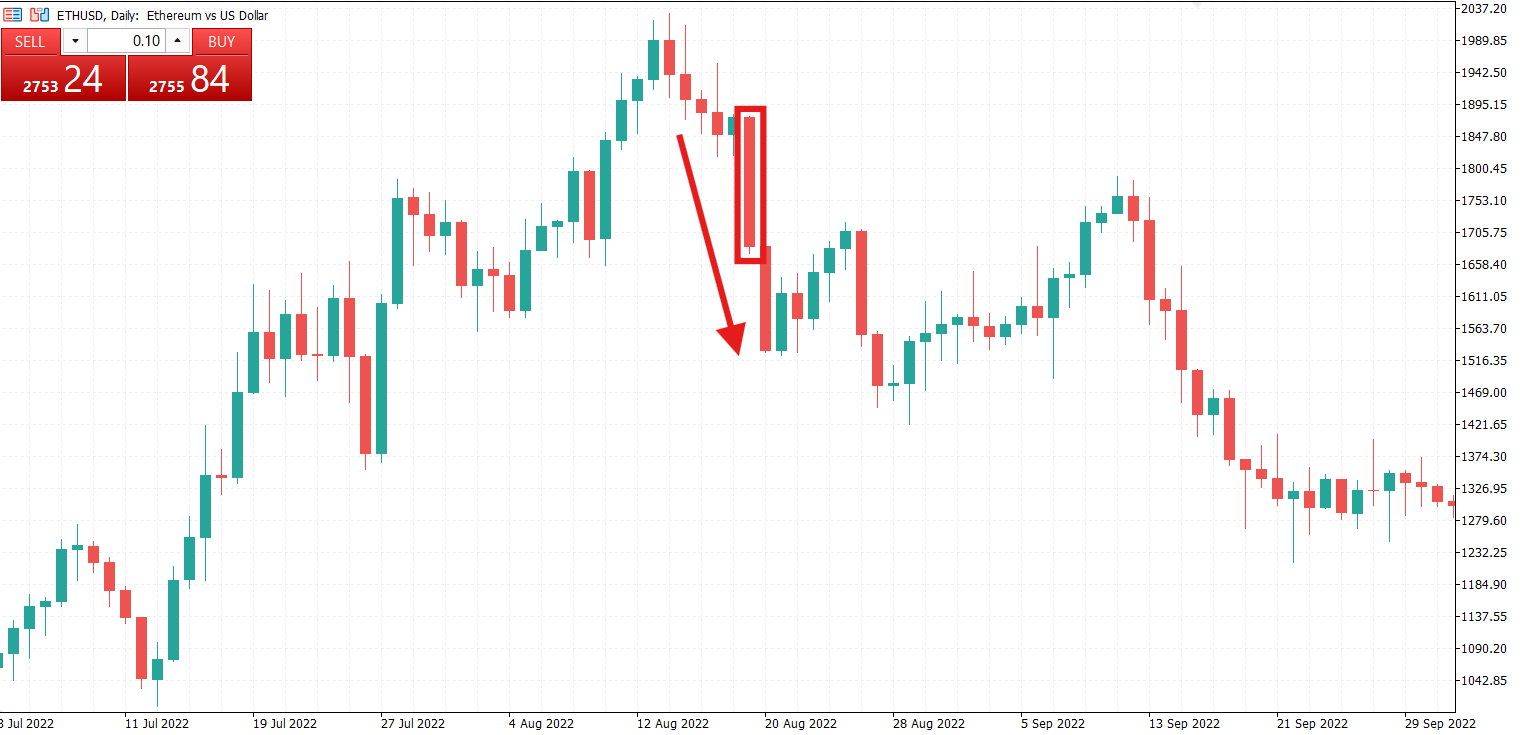
A bearish Marubozu signals strong selling pressure. If it forms after a prolonged rally or near resistance, it can suggest that sellers are taking control and that the market may be preparing for a deeper pullback.
The same candle can have very different implications depending on its location. A bullish Marubozu breaking above resistance is generally more meaningful than an identical candle appearing in the middle of a sideways range.

How to Trade a Marubozu
There are several ways traders can use the pattern.
1. Trade the Breakout
One of the simplest approaches is to look for a Marubozu that breaks through a clearly defined support or resistance level.
For example, if a bullish Marubozu closes above resistance, a trader may consider entering after the breakout or waiting for a retest of the broken level. The idea is to use the strong candle as confirmation that buyers have enough momentum to push the market beyond resistance.
The opposite applies to a bearish Marubozu breaking below support.

2. Trade With the Trend
Marubozu candles can also be useful as continuation signals. In an established uptrend, a bullish Marubozu may show that buyers are still firmly in control. In a downtrend, a bearish Marubozu can confirm continued selling pressure.
This approach is often less risky than trying to use the pattern to predict a complete trend reversal.
3. Use Confirmation
A Marubozu becomes more useful when it is supported by other technical signals. Traders may look at volume, moving averages, RSI, MACD, support and resistance levels, or the overall market trend.
For example, a bullish Marubozu accompanied by above-average volume and a breakout above resistance provides stronger confirmation than a large candle appearing without any additional technical support.
Where to Place a Stop-Loss
Risk management is essential when trading candlestick patterns. A common approach is to place a stop-loss below the low of a bullish Marubozu or above the high of a bearish Marubozu.
However, the exact placement depends on the timeframe, volatility, and trading setup. On a volatile market, placing the stop too close to the entry can result in a trade being stopped out by normal price fluctuations.
The potential reward should also justify the risk. Traders can define a target using the next major support or resistance level, a measured move, or a predetermined risk-to-reward ratio.

Common Mistakes
One of the biggest mistakes is treating every Marubozu as a trading signal. A large candle does not automatically mean that the trend will continue.
Traders should also avoid entering after an unusually large candle simply because they fear missing the move. A strong Marubozu can sometimes appear after a major price move, leaving little room for a favorable risk-to-reward setup.
Another common mistake is ignoring the broader market context. A bullish Marubozu at major resistance may face significant selling pressure, while a bearish candle near strong support may struggle to generate follow-through.

The Bottom Line
The Marubozu is valuable because it makes market pressure easy to see. A bullish candle shows strong control by buyers, while a bearish candle highlights aggressive selling.
The pattern works best when combined with market structure, support and resistance, volume, and risk management. Instead of trading every Marubozu, focus on candles that appear at important technical levels or confirm an existing trend.
Used this way, the Marubozu is less about predicting the market and more about recognizing moments when buyers or sellers have taken clear control of price action.