When crypto prices stop making big moves and start bouncing between clear support and resistance levels, a grid trading strategy can turn that sideways action into a series of smaller trading opportunities.
Instead of trying to predict whether Bitcoin or another cryptocurrency will break higher or lower, grid trading places multiple buy and sell orders across a defined price range. The strategy works best when the market keeps oscillating rather than trending strongly.
What Is Grid Trading?
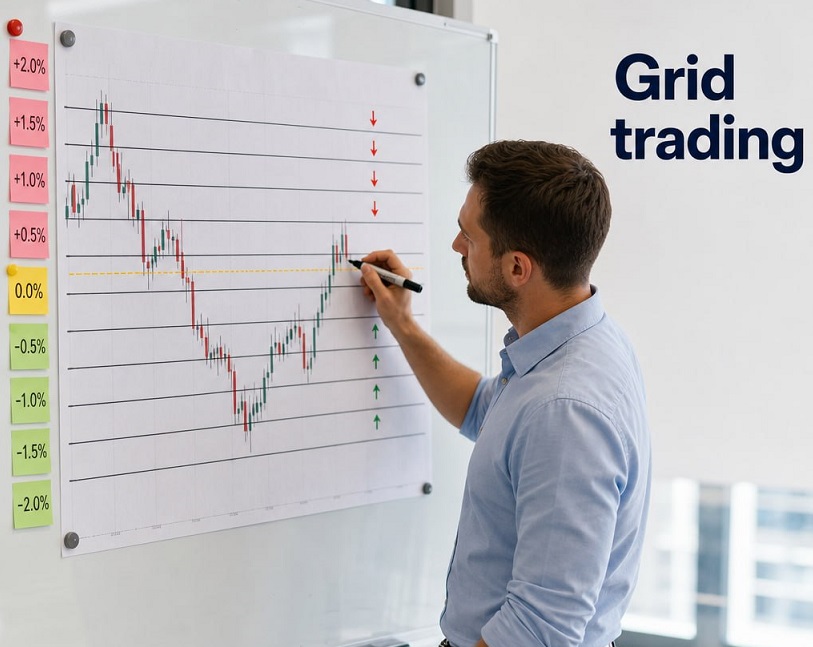
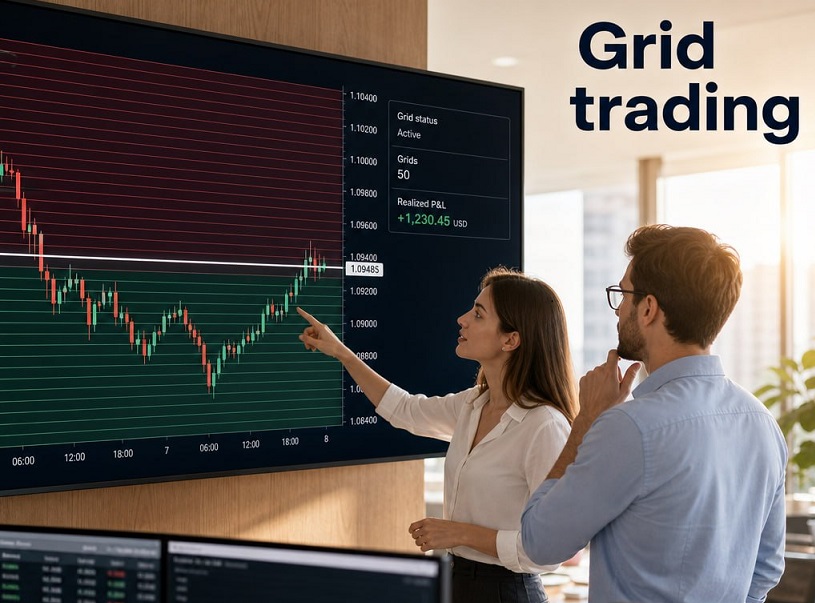
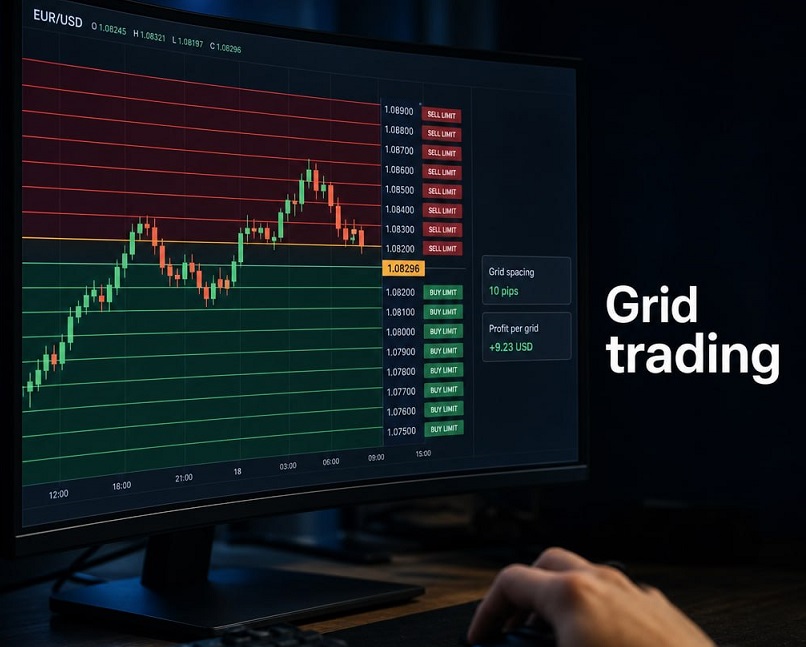
Grid trading is a rules-based strategy that divides a price range into multiple levels, or grids. For example, if Bitcoin is trading between $90,000 and $100,000, a trader might create several price levels across that range. Buy orders sit below the current price, while sell orders sit above it.
When price drops to a buy level, the order is triggered. If price later rebounds to the next grid level, the position can be sold for a predefined profit. Think of it as putting a net across a trading range rather than betting on one big move.
Why Low Volatility Can Suit Grid Trading
Crypto is famous for large price swings, but not every market is a roller coaster. During periods of low volatility, price can spend days or weeks moving back and forth inside a relatively narrow range.
That is the environment grid traders want. A quiet market can provide repeated moves between nearby levels, allowing the strategy to capture several smaller price fluctuations instead of waiting for one major breakout.
However, low volatility does not mean low risk. A sudden breakout can push price straight through multiple grid levels and leave the strategy heavily exposed in one direction.
How to Build a Crypto Grid Trading Strategy
1. Define the Trading Range
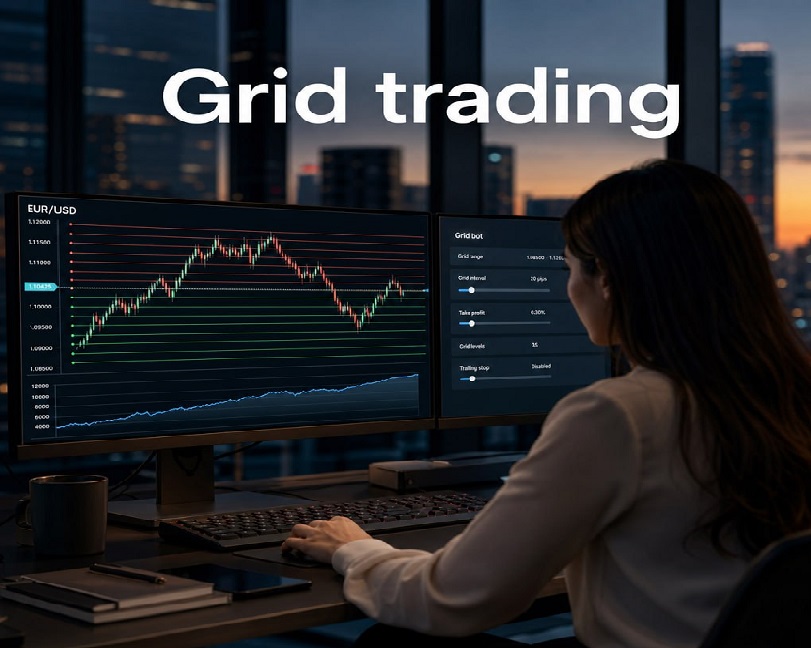
Start with a clear upper and lower boundary. The range should be based on meaningful technical levels rather than an arbitrary percentage. Recent highs, lows, support, resistance and volatility can all help define the range.
2. Choose the Number of Grid Levels
More grid levels create smaller gaps between orders. Fewer levels create larger gaps. A dense grid can generate more trades, but each trade captures a smaller move and trading costs become more important.
3. Set the Grid Spacing
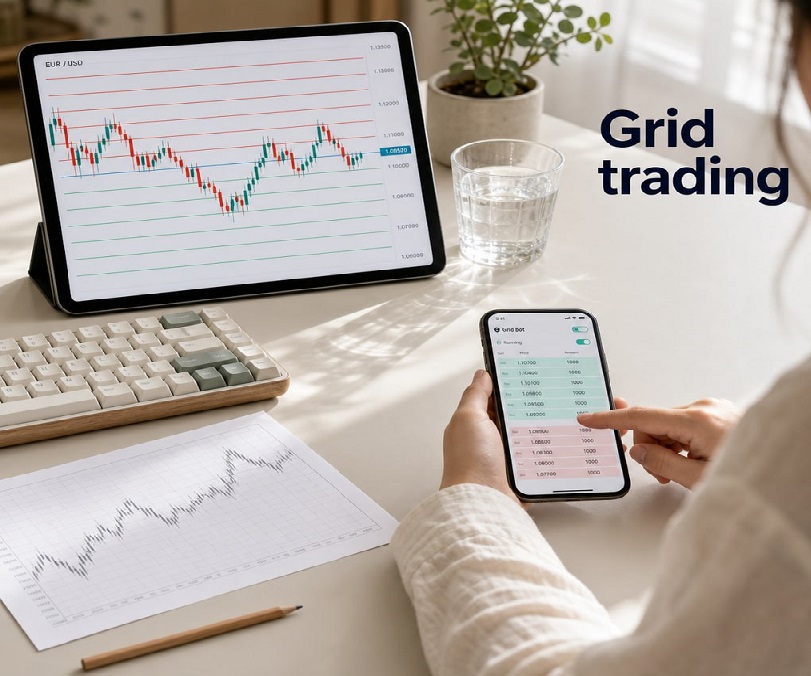
Grid spacing can be fixed in dollars or percentages. For example, a trader could place orders every 1% across a range. The right spacing depends on the asset’s volatility, fees and expected price movement.
If the grid is too tight, normal market noise and fees can eat into profits. If it is too wide, price may not move enough to trigger many trades.
4. Set a Stop or Invalidation Level
A grid should have a point where the strategy is considered wrong. If price breaks decisively outside the trading range, continuing to place orders blindly can turn a range strategy into an accidental trend-following loss. An exit level below support or above resistance can help define the maximum acceptable risk.
When Grid Trading Works Best
Grid trading is generally better suited to:
- Sideways markets
- Clearly defined trading ranges
- Relatively stable volatility
- High-liquidity cryptocurrencies
- Markets without a strong directional catalyst
Bitcoin and major altcoins can sometimes fit these conditions, particularly during periods when traders are waiting for a major economic or crypto-specific catalyst.

When Grid Trading Can Go Wrong
Strong Breakouts
This is the biggest threat. If Bitcoin breaks above the grid and keeps climbing, sell orders may close positions too early while the strategy misses the larger trend. A sharp decline can be even more dangerous if multiple buy orders are triggered as price falls.
Sudden Volatility
Crypto markets can move quickly after inflation data, central-bank decisions, ETF news, regulatory announcements or major industry events. A grid designed for calm conditions may struggle when volatility suddenly explodes.
Trading Fees
Small profits can disappear quickly when a strategy generates a large number of trades. Always calculate expected profit per grid against commissions, spreads and potential slippage.
Grid Trading and Risk Management
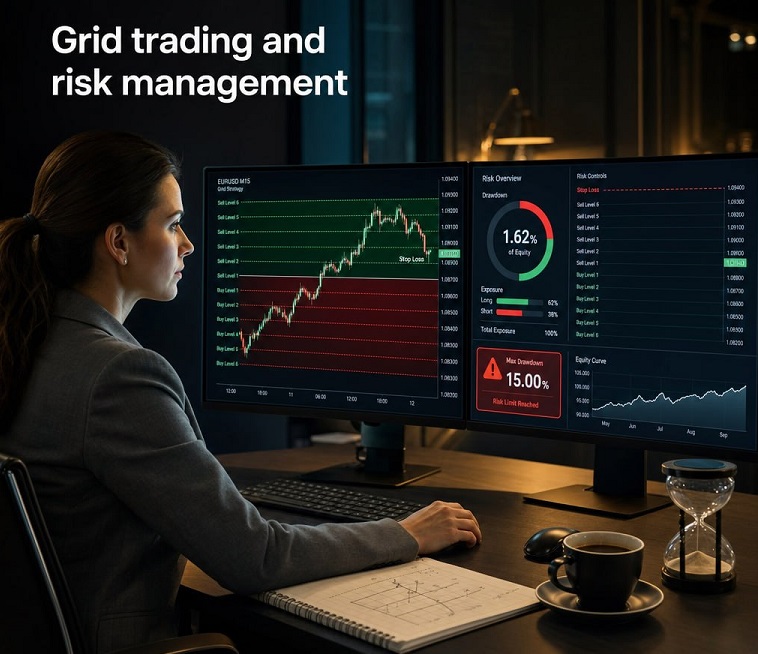
Risk management is what separates a structured grid strategy from simply buying every dip. Avoid committing all available capital to the grid. Keep part of the account in reserve and define how much capital can be exposed if price moves through several levels.
It is also important to monitor position concentration. A falling market can trigger multiple buy orders, gradually turning a neutral range strategy into a large long position. Leverage adds another layer of risk and can make a grid especially vulnerable during sudden crypto moves.
Automated vs Manual Grid Trading
A manual grid requires the trader to monitor price and manage orders themselves. An automated grid bot can place and adjust orders according to predefined rules. Automation can remove some of the emotion from execution, but it does not remove market risk. A bot will follow its rules even when market conditions have completely changed. Before using automation, define the trading range, grid spacing, maximum exposure and exit conditions.
Final Thoughts
A crypto grid trading strategy is built around one simple idea: buy lower, sell higher, and repeat while price stays inside a range.
Low-volatility markets can provide a natural environment for this approach, but the strategy depends on the range holding. The moment a quiet market turns into a strong trend, the same grid that worked yesterday can become a liability.
The goal is not to predict every move. It is to build a grid that fits current volatility, control the downside and know when to shut the strategy down.