Every trader experiences losses, regardless of their experience, trading style, or the financial markets they operate in. Even the most successful strategies go through periods of negative performance, making drawdowns an unavoidable part of trading. The difference between profitable traders and those who fail is not the absence of losses but the ability to manage them effectively.
A drawdown management strategy for a trading account is designed to protect trading capital during difficult market conditions while maintaining the potential for future growth. Rather than chasing quick recoveries after losses, disciplined traders follow structured risk management rules that keep drawdowns within acceptable limits. This approach improves long-term consistency and reduces the emotional pressure associated with trading.
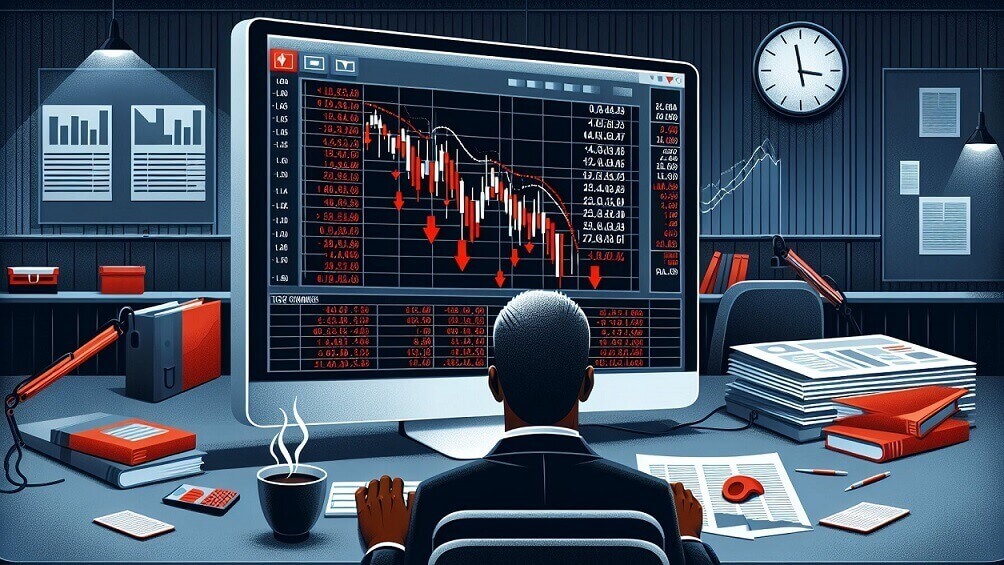
Understanding Drawdowns in Trading
A drawdown is the decline in the value of a trading account from its highest point to its lowest level before a new peak is achieved. It is usually expressed as a percentage of the account balance. For example, if an account grows from $20,000 to $25,000 before declining to $22,500, the drawdown from the peak is 10%.
Every trading strategy has an expected drawdown range based on historical performance. Some systems produce frequent but relatively small losses, while others may experience larger temporary declines in exchange for higher long-term returns. Understanding these characteristics allows traders to set realistic expectations and avoid abandoning a profitable strategy during normal periods of underperformance.
The mathematical impact of drawdowns should never be underestimated. Recovering from a small loss requires only a modest gain, but deeper drawdowns demand increasingly higher returns. A 20% loss requires a 25% gain to recover, while a 50% drawdown requires the account to double in value before reaching its previous high. This is why protecting capital is more important than maximizing short-term profits.

Essential Elements of Drawdown Management
Effective drawdown management starts with proper risk control. Position sizing determines how much capital is exposed on every trade and directly influences the overall stability of a trading account. Limiting risk prevents a series of losing trades from causing irreversible damage.
Professional traders also understand the importance of planning for unfavorable market conditions before they occur. Instead of reacting emotionally after losses, they establish clear rules that define when to reduce exposure, pause trading, or reassess their strategy. Consistency in following these rules often makes a greater difference than the trading strategy itself. An effective drawdown management strategy should include the following practices:
- Risk no more than a small percentage of your capital on each trade.
- Calculate position sizes according to your account balance.
- Place stop-loss orders before entering every position.
- Define a maximum acceptable drawdown for the entire account.
- Reduce trading volume after consecutive losing trades.
- Diversify across multiple markets or trading strategies.
- Keep a detailed trading journal for performance analysis.
- Monitor key risk metrics on a regular basis.
- Avoid increasing position sizes to recover losses quickly.
- Pause trading if predefined drawdown limits are reached.
These principles work together to create a structured framework that minimizes unnecessary risks while allowing traders to remain active in changing market environments.
Common Mistakes That Lead to Larger Drawdowns
One of the biggest mistakes traders make is attempting to recover losses immediately after a losing streak. Emotional trading often leads to oversized positions, impulsive entries, and poor risk management decisions. Instead of reducing losses, these actions frequently deepen the drawdown and make recovery far more difficult.
Another common problem is ignoring stop-loss levels. Some traders move their stops farther away in the hope that the market will eventually reverse. While this occasionally works, it usually exposes the account to significantly larger losses than originally planned. A disciplined trader accepts small losses as a normal cost of doing business rather than allowing them to become major setbacks.
Overtrading is another factor that contributes to excessive drawdowns. Entering too many trades without clear signals increases transaction costs and exposes the account to unnecessary risk. Quality should always take priority over quantity when executing a trading strategy.
Many traders also fail to adapt to changing market conditions. Strategies designed for trending markets may perform poorly during periods of consolidation, while range-trading systems often struggle in highly volatile environments. Regularly reviewing trading results helps identify whether losses are caused by temporary market conditions or by weaknesses within the strategy itself.
Building a Sustainable Risk Management Plan
Long-term trading success depends on consistency rather than occasional large profits. A sustainable risk management plan establishes clear guidelines for position sizing, maximum exposure, acceptable drawdown levels, and performance evaluation. These rules should remain consistent regardless of recent trading results or emotional state.
Maintaining a trading journal is one of the most valuable habits for continuous improvement. Recording entry and exit points, market conditions, reasons for each trade, and emotional responses provides valuable information that can be used to identify recurring mistakes. Over time, this data helps traders refine both their strategy and their approach to risk management.
Technology also supports effective drawdown management. Modern trading platforms allow traders to monitor account performance in real time, automate position sizing, establish daily loss limits, and receive alerts when risk thresholds are exceeded. Automation reduces emotional decision-making and encourages consistent execution of the trading plan.
Ultimately, successful traders recognize that losses cannot be eliminated completely. Instead, they focus on controlling the size of losses so that profitable periods can outweigh temporary setbacks over the long term.
Conclusion
A well-designed drawdown management strategy for a trading account is one of the most important components of successful trading. By controlling risk, limiting position sizes, using stop-loss orders, monitoring account performance, and maintaining strict trading discipline, traders can significantly reduce the impact of inevitable losing periods. Drawdowns are a natural part of trading, but when they are managed properly, they become temporary challenges rather than obstacles to long-term profitability.