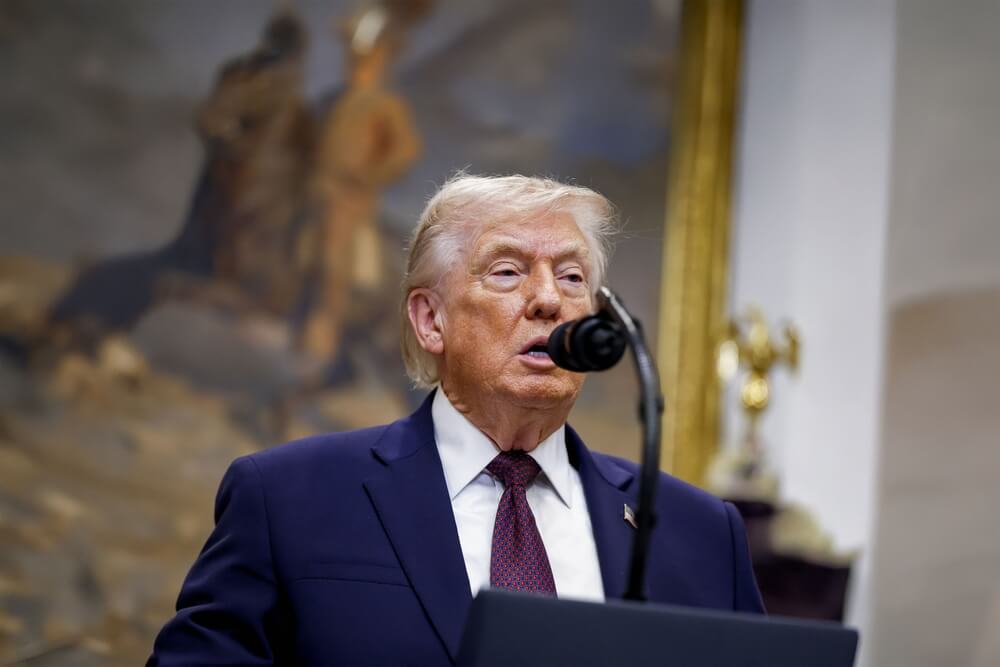
President Donald Trump defended his trade agenda following a Supreme Court ruling that struck down his emergency tariffs under the International Emergency Economic Powers Act (IEEPA). Speaking during his State of the Union address, Trump assured that the deals negotiated over the past year remain intact, while warning countries against attempting to “play games” with U.S. trade agreements, suggesting higher duties could be imposed under alternative trade laws.
The Supreme Court decision, however, has left many trading partners reassessing their positions. Countries that had agreed to concessions based on IEEPA-backed tariffs now face uncertainty, while those that resisted U.S. demands may feel vindicated. Analysts say rebuilding agreements under other authorities, like Section 301 of the Trade Act of 1974, will require formal investigations and additional legal processes, delaying clarity for global markets.

Several nations are already taking cautious steps. India paused finalizing a trade deal ahead of a Washington visit, Japan warned that new universal tariffs could impose extra burdens, and the European Parliament postponed a vote on a U.S.-EU trade framework. Canada’s provincial leaders welcomed the ruling, framing it as a chance to avoid potentially unfavorable deals, while Mexico and China are reviewing the ruling’s implications before engaging in further negotiations.
With the IEEPA pathway blocked, the Trump administration is exploring alternative legal avenues, including Section 301 and Section 232 of the Trade Expansion Act of 1962, to continue its trade agenda. Experts warn that uncertainty will likely persist, as existing agreements remain incomplete and unapproved by Congress, leaving global partners in a cautious “wait-and-see” posture while the U.S. charts its next steps.