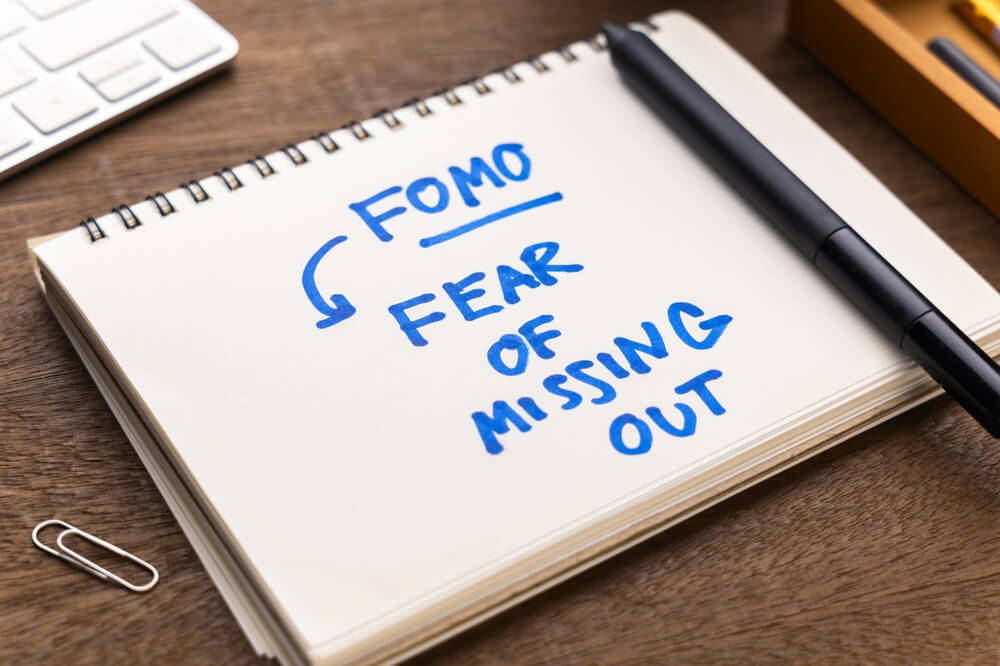
Fear of Missing Out (FOMO) in trading is the emotional urge to enter a trade simply because prices are moving and others appear to be making money. It is one of the most common psychological traps traders fall into, often leading to impulsive decisions that ignore strategy and risk management. Markets reward discipline, not emotion, and by reading this article, you’ll learn how to recognize FOMO and avoid letting it control your trading decisions.
What Is FOMO in Trading?
FOMO in trading is rooted in basic human psychology, particularly the fear of loss, social comparison, and the brain’s tendency to prioritize immediate rewards over long-term outcomes. When traders see prices rising quickly, the emotional response often overrides rational analysis, creating urgency to act before the opportunity “disappears.”
Modern trading environments boost this effect. Social media posts, trading group chats, and sensational news headlines constantly highlight winning trades and rapid gains, reinforcing the illusion that everyone else is profiting. This exposure increases emotional pressure and can distort a trader’s perception of risk.
The key distinction lies between rational opportunity and emotional impulse. Rational opportunities are identified through analysis, planning, and alignment with a trading strategy. Emotional impulses, driven by FOMO, are reactive, rushed, and often occur after a move is already underway, when risk is highest and reward is limited.

How FOMO Shows Up in Real Trading
FOMO often manifests in ways that are easy to spot once you know what to look for:
- Chasing price after a sharp move. Traders jump in after an asset has already spiked, hoping the trend will continue, often buying at the peak.
- Entering trades randomly, not having a clear plan. Decisions are made on impulse rather than strategy, ignoring entry criteria and market analysis.
- Increasing position size out of excitement. The thrill of a potential win leads traders to risk more than their rules allow.
- Ignoring risk management and stop-loss rules. FOMO can override discipline, causing traders to skip essential safeguards and expose themselves to large losses.
Recognizing these behaviors is the first step toward breaking the cycle and trading with discipline rather than emotion.
Why FOMO Is Dangerous
FOMO can have serious consequences for traders. Chasing market moves often leads to buying near tops and selling near bottoms, which quickly erodes capital. Emotional trades tend to ignore proper risk-to-reward ratio, creating positions where potential losses outweigh potential gains.
The pressure to be in the market all the time can result in overtrading, causing significant account drawdowns and increasing stress. Over time, this constant cycle of impulsive decisions and losses can lead to emotional burnout and a loss of confidence, making it even harder to trade effectively. Understanding these dangers shows why managing FOMO is essential for long-term success.
The Difference Between Momentum Trading and FOMO
Momentum trading and FOMO may look similar at first, but they are totally different. Momentum trading is based on a planned strategy, where traders identify potential moves using analysis and enter positions with clear entry and exit points. FOMO, on the other hand, is emotional chasing, jumping into trades impulsively because prices are moving, without any predefined plan.
Predefined entry and exit levels are critical in momentum trading, as they help manage risk and lock in gains. Successful momentum traders also rely on confirmation and timing, waiting for signals that align with their strategy rather than reacting to every price spike. By following a disciplined approach, momentum trading turns opportunities into calculated decisions, while FOMO leaves traders vulnerable to unnecessary losses.

How to Recognize FOMO Before It Hurts You
Recognizing FOMO early can prevent costly mistakes. Emotional signals such as sudden feelings of urgency, anxiety, or overexcitement often indicate that you are about to make an impulsive trade. Behavioral red flags can also appear, including entering trades late after a move has already started or taking “revenge trades” to recover recent losses.
Keeping a trading journal and regularly reviewing your decisions can help you spot these patterns, reflect on what triggered them, and develop strategies to stay disciplined. By becoming aware of both the emotional and behavioral signs of FOMO, you can make more deliberate, strategic choices instead of reacting to the market out of fear or impulse.
How to Control FOMO in Trading
FOMO is one of the most common psychological traps traders encounter, often driving impulsive decisions that overlook strategy and risk management. Because markets reward discipline rather than emotion, learning to recognize and manage FOMO is essential for long-term success. Fortunately, there are practical steps you can take to keep it under control:
- Create and follow a trading plan. Define clear entry and exit rules, position sizes, and risk limits before you trade.
- Use pending orders. This helps ensure trades are executed at predefined prices, reducing impulsive entries.
- Accept that missing trades is normal. Opportunities will always come and go; patience is a key part of success.
- Focus on long-term consistency. Prioritize disciplined, repeatable strategies over chasing single trades.
- Keep a trading journal. Record your trades, emotions, and decisions to identify patterns of FOMO and improve over time.
- Set clear stop-losses and risk management rules. Protect your account from large losses and avoid letting emotions override your plan.
- Step back when emotions run high. If you feel anxious or overly excited, take a break and return only when you can trade rationally.
Practical Techniques to Reduce FOMO
Reducing FOMO starts before the market opens. Pre-market preparation, such as reviewing charts, news, and potential trade setups, helps you enter the day with a clear plan. Using trade checklists ensures that each trade meets your strategy’s criteria, preventing impulsive decisions.
Setting strict risk limits per trade and per day keeps losses manageable and protects your account from emotional reactions. Finally, stepping away after big wins or losses allows you to reset mentally, avoid revenge trades, and return to the market with a calm, disciplined mindset. By combining preparation, rules, and self-care, traders can minimize FOMO and trade more strategically.
FOMO is a psychological challenge. Success comes from discipline, patience, and following a consistent process rather than chasing every market move. The best traders don’t try to catch every opportunity. They focus on executing their own well-planned trades.