
Crypto markets move fast, and traders know that spotting reliable patterns can be the difference between a winning trade and a missed opportunity. Among these patterns, the ascending triangle stands out as a powerful bullish setup that signals potential breakouts.
In this article, you’ll learn how to identify an ascending triangle, confirm its breakout, and execute trades with confidence, giving your crypto strategy a clear edge in volatile markets.
What is an Ascending Triangle?
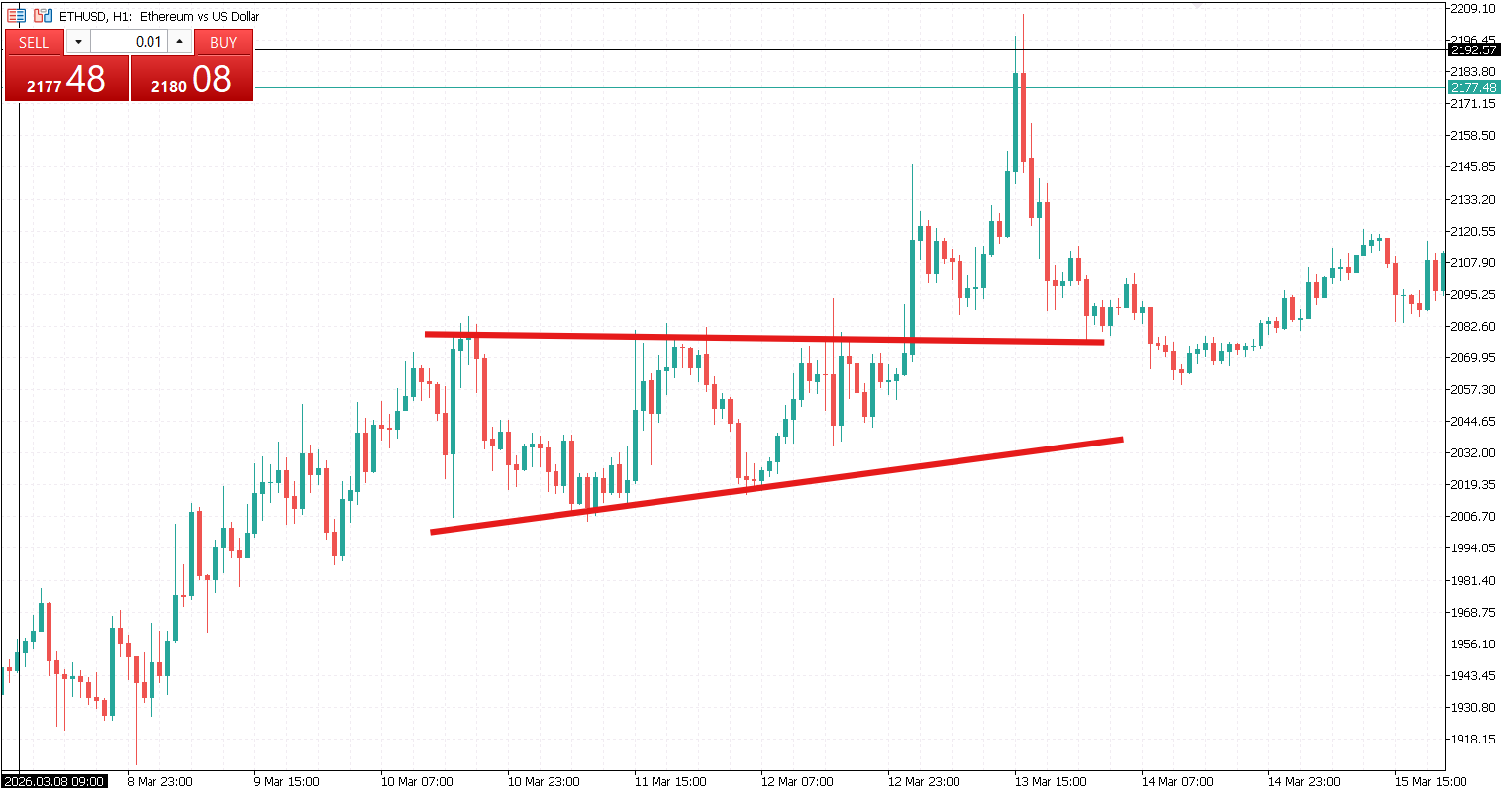
An ascending triangle is a classic bullish continuation pattern often seen in crypto and other financial markets. It forms when a flat resistance line at the top meets a rising support line at the bottom, creating a triangle that tilts upward.
Visually, it looks like a series of higher lows pushing against a horizontal ceiling. This shape shows that buyers are gradually gaining strength, testing the resistance repeatedly. When the price finally breaks above the resistance, it often triggers a strong upward move.
Ascending triangles differ from other triangle patterns:
- Symmetrical triangles. Both support and resistance slope toward each other; they can break in either direction.
- Descending triangles. Flat support and falling resistance, usually signaling a bearish breakout.
How to Identify an Ascending Triangle in Crypto
Spotting an ascending triangle can give you an edge in crypto trading. Here’s a step-by-step guide:
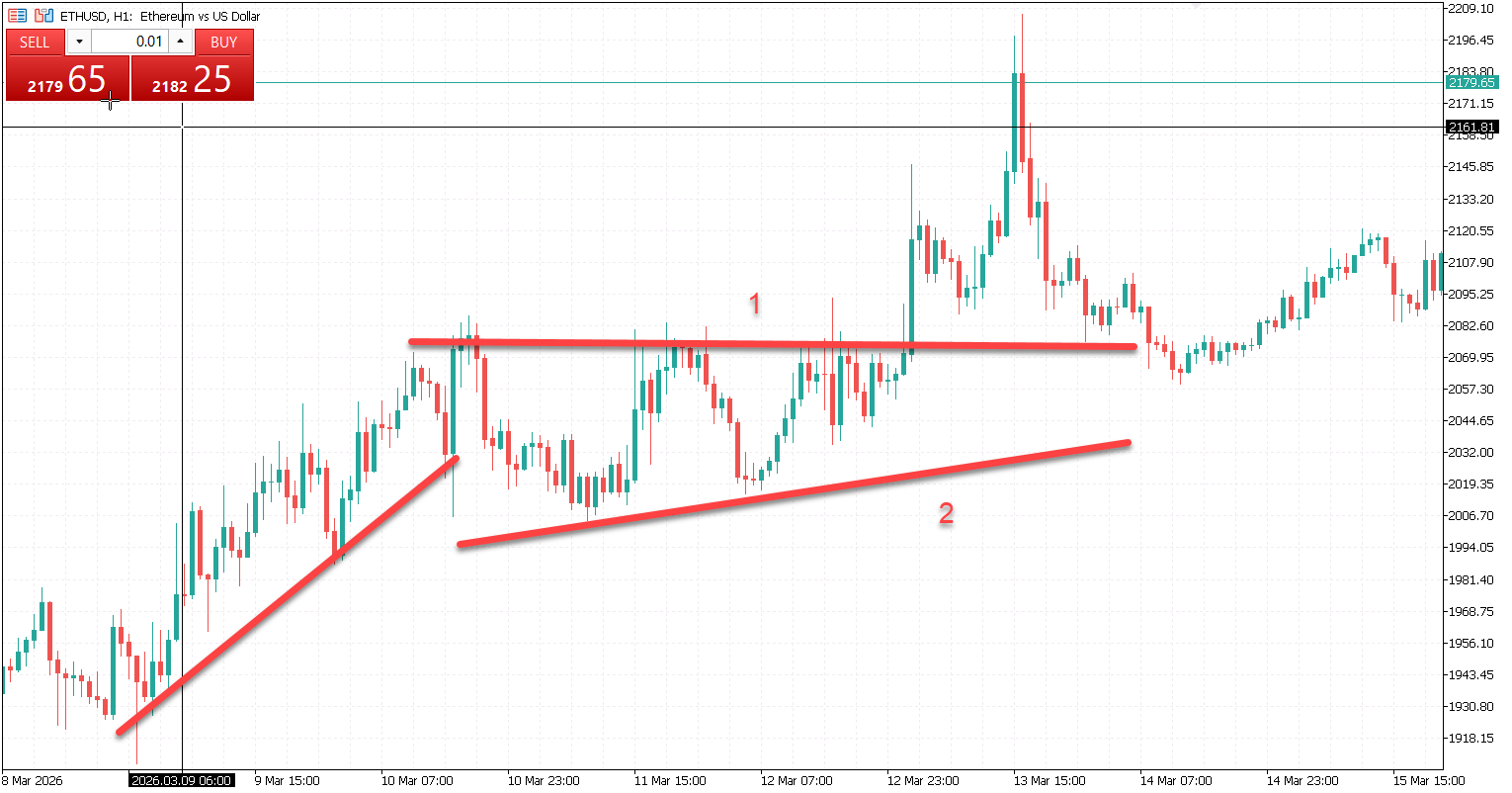
- Spot a horizontal resistance line. Look for a price level where the asset repeatedly hits a ceiling but doesn’t break through.
- Identify rising lows. Draw a trendline connecting progressively higher lows. This shows buyers gaining strength.
- Confirm a prior uptrend. Ascending triangles are most reliable when they appear after an upward move.
Breakout Strategy
Once you’ve identified an ascending triangle, the next step is trading the breakout. Here’s how:
- Entry point. Enter a buy order once the price breaks above the horizontal resistance. Avoid jumping in too early.
- Volume confirmation. Look for a spike in trading volume. Higher volume signals that the breakout is likely genuine, not a false move.
- Stop-loss placement. Place your stop-loss just below the last higher low within the triangle. This protects your trade if the breakout fails.
- Take-profit target. Measure the height of the triangle (distance from base to resistance) and project that upward from the breakout point. This gives a reasonable profit target.
Following this strategy helps you trade ascending triangles with clear rules, reducing guesswork and improving risk management.

Common Mistakes to Avoid
Trading ascending triangles can be highly profitable, but beginners often fall into common traps that reduce their chances of success. Understanding and avoiding these mistakes is key to capturing strong, sustainable breakouts.
- Entering too early. Many traders get excited when they see higher lows forming and try to enter before the breakout. While it might seem tempting to get in early, this can backfire if the price tests the resistance one more time or pulls back.
- Ignoring volume signals. Volume is a critical component of ascending triangle breakouts. A breakout with low volume is often weak and prone to reversal. Ignoring volume can lead to entering trades that look promising on the chart but fail in reality.
- Trading against the trend. Ascending triangles are continuation patterns, meaning they usually appear in an uptrend. Trying to trade them during a downtrend or in a sideways market reduces reliability and can result in losses.
- Neglecting risk management. Some traders enter breakouts without defining stop-loss levels or position sizes. This exposes them to unnecessary losses if the breakout fails.
- Chasing every breakout. Not every ascending triangle leads to a strong move. Jumping into every breakout opportunity can lead to overtrading and losses.
Tips to Boost Success
To improve your results when trading ascending triangles, try these tips:
- Use supporting indicators. Combine the triangle setup with tools like RSI, MACD, or moving averages to confirm momentum and breakout strength.
- Practice on a demo account. Test the strategy risk-free before using real capital. This helps you build confidence and refine your timing.
- Keep a trading journal. Record your trades, entry and exit points, and observations. Reviewing your journal helps identify patterns, mistakes, and opportunities for improvement.
The ascending triangle is a high-probability bullish setup that can help crypto traders spot potential breakouts with confidence. By identifying the pattern correctly, confirming the breakout, and applying disciplined risk management, you can increase your chances of successful trades.
Start putting this strategy into practice today, scan your crypto watchlist for ascending triangles and see how they can enhance your trading decisions.